You're Not Burned Out. You're Stuck on the Inhale.
There's a moment most people recognize.
Back-to-back meetings. An inbox that never empties. Lunch eaten at your desk...again. You keep adding things to your plate and nothing ever comes off.
You call it burnout. Your HR team calls it burnout. Your doctor probably calls it stress.
But I've been sitting with a different idea.
What if you're not burned out? What if you're stuck?
Specifically, stuck on the inhale.
The breath nobody talks about...
A complete breath has four parts. Most people only think about two (the inhale and the exhale).
One single breath includes:
Inhale. Pause. Exhale. Pause.
That first pause, the moment at the top of the breath, is where you hold what you've taken in. The exhale is where you let it go. And the second pause, at the bottom? That's the reset. The empty space before the next cycle begins.
Modern work has gutted all four.
We inhale fast. We skip both pauses entirely. We cut the exhale short. Then we're straight back to inhaling again before the last breath even finished.
More emails. More goals. More deliverables. More noise. In, in, in...and never the pause, the release, or the quiet that would let us come back to it all with a clear head.
The body starts to protest. Tightness in the chest. Shallow breathing. That persistent fog that descends somewhere around 3pm and doesn't lift.
We call it stress. We throw wellness programs at it. We buy subscriptions to apps nobody opens.
But you can't out-meditate an incomplete breath cycle.
What staying on the inhale actually costs...
I've worked with corporate teams for nearly two decades. Financial services. Healthcare. Government. Education.
Brilliant people. High performers. People who care deeply about their work.
And almost universally, they are breathing wrong.
Not technically wrong. Physiologically, the lungs are doing their job. But the *pattern* is wrong. All four parts of the breath, inhale, pause, exhale, pause, compressed into one frantic loop with zero space.
That pattern activates the stress response. It keeps the nervous system in a low-grade state of alarm. It narrows thinking. It speeds up reactivity. It makes it hard to listen, decide and to lead.
An entire company can be stuck on the inhale.
More productivity strategies. More engagement surveys. More wellness perks. No exhale.
And then people wonder why nothing changes.
The exhale is not giving up...
Here's what I need you to know about the exhale. It is not passive.
It is the move that makes the next inhale possible.
I've run 11 marathons. I know what it feels like when your breathing falls apart at mile 18. I also know what it feels like to get it back, to exhale deliberately, to find the rhythm, and to carry that rhythm to the finish line.
The people and teams who perform at the highest levels are not the ones who breathe in the most. They're the ones who have learned to exhale well. To release and to regulate.
That's a skill. And it can be taught.
What this actually looks like inside the workday...
It doesn't mean longer lunch breaks or a meditation room nobody uses.
It means building real, physiological breathing into the structure of the workday itself. Not alongside it. Inside it.
It's a shift.
When a team opens a meeting with 90 seconds of guided breathing, cortisol drops. Focus sharpens. The conversation that follows is different...less reactive, more creative.
When an organization builds micro-recovery into the day as a practice, not a perk, outcomes improve.
I've seen it. I've measured it. I've built programs around it for nearly 20 years.
The science has been here all along. What's been missing is the application, the breathing that happens at 10am on a Tuesday, not on a yoga mat on a Saturday.
Something is coming...
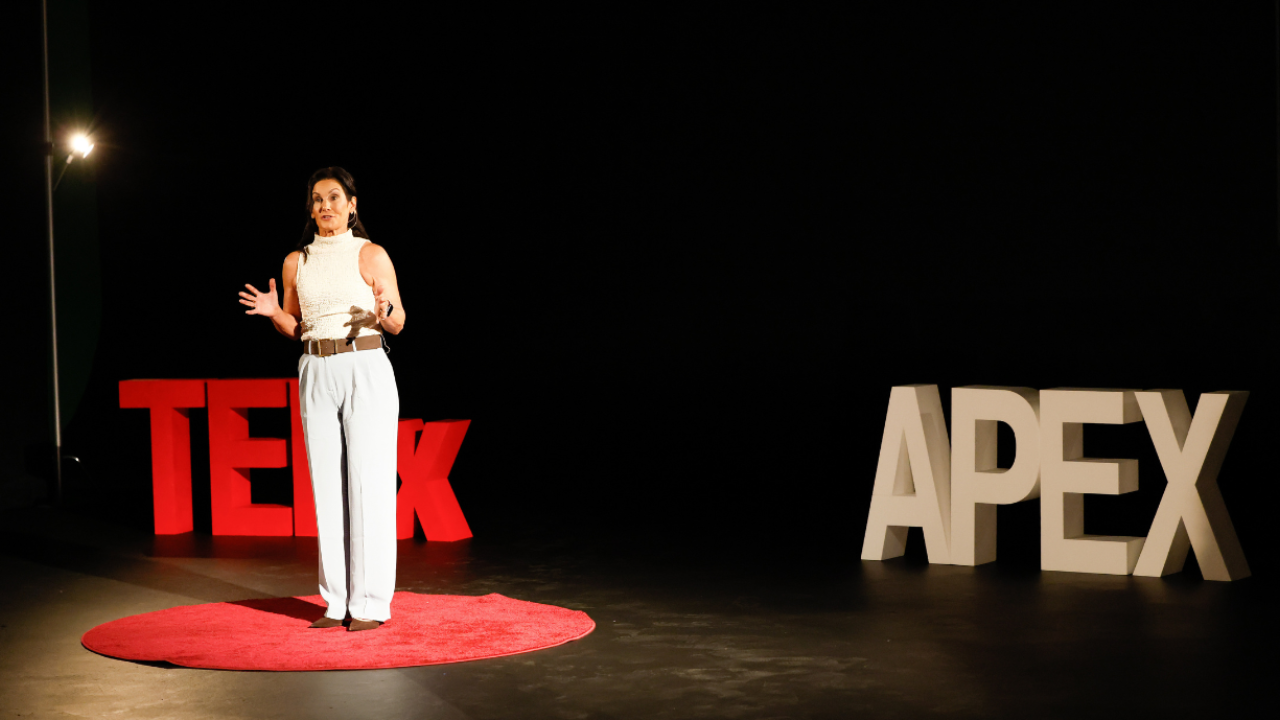
I recently delivered a TEDx talk on exactly this idea.
It's called *How You Breathe Is How You Live".
The full talk drops soon. And when it does, I hope you'll watch it, not because it's mine, but because it starts somewhere unexpected. Not with data. Not with research.
With a breath.
Two breaths, actually. One that changed everything. And one I'm still learning to finish.
I'll share the link the moment it's live. If you want to be the first to know, reply to this email or leave a comment below.
Until then, just notice.
Are you inhaling right now?
Or are you making it all the way to the pause?
There's a difference. It's real. And it matters more than most of us have been told.
*Stacy Fritz is the founder of FIT2order, a WBENC-certified corporate wellness company, a TEDx speaker, and the inventor of the vidaBALL®, a patented handheld breathing device used by teams who need focus fast. She has been helping organizations make wellness work since 2008.*